Girl Math and the Politics of Value
By Silvia Bombardini
Whence arose the illusions of the monetary system?
–Karl Marx, Capital
This puts into question all prevailing economies:
their calculations are irremediably stymied by woman’s pleasure
– Luce Irigaray, This Sex Which Is Not One
1. The Internet of Girls


Fig. 1: @houseofmaeli, TikTok, 23 Feb 2024
Fig. 2: @esmeececilia, TikTok, 17 Sep 2023
To think with girl math we must in the first place think with the context of its emergence, in the summer of 2023, in a tightly woven world wide web of girl relations. The following takes a closer look at both the girl and the math of girl math, and at what theoretical frameworks might complicate our understanding of both. This section pans out to consider the network, what may be described as the internet of girls, at this particular moment in time. And as we set out to do so, it is crucial to acknowledge that while the internet of girls is itself a phenomenon worth investigating, to put all girls in one basket is to miss out on their irreconcilable differences. Some girl relations are relations of opposition. It is tempting, in this respect, to situate the neoliberal, individualist girlboss (est. c.2014) at the opposite end of the spectrum of online girlhood from the tradwife (est. c.2020), uncritically devoted to traditional gender roles. In 2023, however, online girlhood was already split in more than just two poles, as the just-a-girl (Fig. 1) had come to be to the girlboss, what the girl dinner (Fig. 2) was starting to be to the tradwife: antitheses. In response to the exhausting and endless demands that career and family life place on women and girls, participants in both trends were reclaiming to their advantage stereotypes concerning feminine incompetence, frivolity, laziness or irrationality, and taking solace in the resonance of these tactics across social media communities. Though ironic at heart, as they gained popularity, just-a-girl and girl dinner would also come to face inevitable backlash, when the line between reclaiming and reinforcing seemed to blur, and when consumer capitalism, as it’s wont to do, endeavoured to subsume, for example, the girl dinner trend towards the promotion of side dishes at fast food joints (Valinsky 2023).
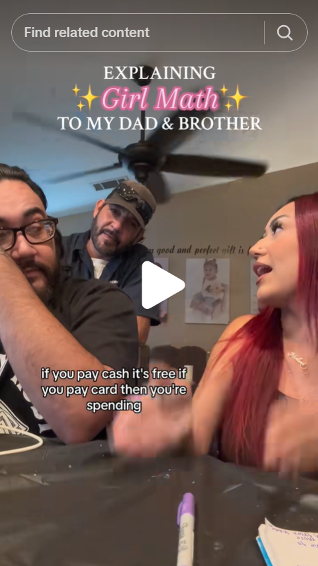

Fig. 3: @danyaghass, TikTok, 18 Aug 2023
Fig. 4: @marissavargass, TikTok, 20 Oct 2023
It is in the midst of these relations of resonance and opposition, backlash and assimilation, that girl math comes into being, as a way for girls to justify purchases that would otherwise have been difficult to justify. Girl math is used to describe some fairly common practices, such as mentally splitting the cost of an expensive item over the number of times we can predict that item will be used, ordering something extra to get to the free shipping threshold, rounding price tags down rather than up, or considering the refund we might receive from returning products as a bonus to add to our daily or monthly budget (Fig. 3). Not unlike just-a-girl and girl dinner, girl math started out as a joke, arguably in response to an economy in which treating oneself to anything beyond strict necessities seems less and less defensible, but went on to find extensive traction on social media, and was subsequently criticised for perpetuating the very stereotypes it ostensibly sought to make fun of. In 2023, in the United States, not 50 years had passed since women were not deemed financially responsible enough to have a bank account in their owb name, and some felt it was too soon for women and girls to publicly – if ironically – own up to these irresponsible practices (Clark 2023), which is fair to assume are also often exaggerated for entertainment purposes. Moreover, critics observed how girl math videos on TikTok are often filmed in the presence of men – dads and brothers (Fig. 4), boyfriends and husbands, a whole team of male accountants – whose spontaneous reactions to the girl math practices of the woman filming the video support a perspective that portrays men as logical where women are not. It could be argued, however, that provoking these men’s reactions, which range from annoyed to frustrated or alarmed, is the whole point of explaining girl math to them. In other words, that what women and girls are filming and sharing with other women and girls, for entertainment purposes across social media communities, are the annoyance, frustration, or alarm of logical men.
Another argument against girl math comes from those who believe that women and girls should simply stop justifying themselves, and that the sense of guilt we are conditioned to feel, which prompts us to come up with excuses for how we spend our money, is truly what women and girls should fight. As Erin Wylie and Jonah Weiner of Blackbird Spyplane put it, with respect to clothing, in a Substack newsletter titled ‘Against ‘‘Cost Per Wear’’’:
Is your relationship to putting that s**t on so anhedonic that you would turn the act of rocking a slapper into an ongoing accounting task? … Is your faith in your own enthusiasm for a garment so wobbly that you need to buttress & leverage it with spurious math? (Wylie and Weiner 2024)
Yet although cost per wear, or cost per use practices are often referenced in girl math content, there’s nothing actually apologetic about the results one gets when searching for the hashtag on TikTok. Girl math is an online joke, yet the women and girls who take part in the trend tend to explain their practices as one would share financial advice: enthusiastically, occasionally with actual blackboards. The audience recognise tactics they already use, learn new ones, and populate their comment sections with more girl math axioms that contribute to the growth of this subject field. It’s unclear whether any guilt was ever actually felt by these content creators or their audience, but if it was it is exorcised in this collective exercise. ‘I wonder how much money I could have saved if I wasn’t just a girl’ wonders TikTok user @_.sbxb, for example, in the caption of a video showing drawers after drawers of pale pink hair accessories, makeup, fragrances, jewellery (Fig. 5). The regret here is obviously performative: the just-a-girl creator embraces her own financial irresponsibility, which might resonate with her followers – she might even do so only as an excuse, in order to display a treasure trove of items that her audience might envy her for, and no less directly her spending power. But what if the regret was earnest? Girl math should not be taken seriously, but if it were, it could certainly assuage @_.sbxb’s guilt. To the just-a-girl wondering how much money she could have saved if her spending habits were more responsible, girl math promises that her purchases are, in fact, sensible in the long term. Saving money, in girl math, is never more responsible than buying stuff. If unlike girl dinner, girl math cannot be commodified, this is only because it already is at heart all about impulsive purchases. Consumer capitalism should lap it up.
Except it doesn’t, or not quite. There’s something in girl math somewhat sinister to patriarchal capitalism as an ideology. Something that may cause in its defenders, annoyed, frustrated, or alarmed reactions. There is something that this online joke makes fun of, which rubs certain people the wrong way, and it is not the mocking of women and girls’ financial skills that its critics believe it responsible for. The most popular girl math videos are the least logical, yet a certain flair for numbers is arguably necessary to keep up the “ongoing accounting task” (Wylie and Weiner 2024) that girl math would require, if it was taken seriously. Might that thing which girl math trivialises and ridicules not be the monetary system itself? In acknowledging out loud the usually tacit ways that women and girls use to justify their gathering of treasure troves of desirable objects, via a tactical approach to sales and returns or a more or less convincing break down of the price of the item they want – “this sweater cost $400 but I’ve already worn it 7 days in a row … I only have to wear it 6 more weeks, total, as long as I’m alive, before that drops to a mere $8 a wear” (Wylie and Weiner 2024) – is girl math challenging the imperative of financial accumulation as the ultimate goal of the individual in a capitalist society?
1. The Girl and The Math
2.1 The Girl
To appreciate this possibility, it might be necessary to take a step back and clarify where the girl in girl math is situated, not just in the spectrum of online girlhood today, but with respect to the history of gendered relation with the internet and with consumerism in late capitalism. In the 1990s, cyberfeminists welcomed a distancing from our physical bodies and the societal prejudices they are subject to, as the fundamental promise of the internet to women. In Sadie Plant’s words: “There is no authentic or essential woman up ahead … Instead there is a virtual reality” (2000, p. 335). A quarter of a century later, it is not just that the internet has failed to fulfil these fantasies of erasure, but that these fantasies of erasure themselves now seem outdated, contemporary feminisms having grown ever more attuned to the specificities of embodied experience. Meanwhile, in social media trends like girl math, girl dinner and just-a-girl, but also the girlboss and the tradwife, femininity rather than abandoned is hypervisibile and exalted: redeemed, typecast, filtered, radicalized – and perhaps most importantly, monetised. The girl in the flesh does not have to be a girl online, but why would she choose not to? For views and engagement, a girl is the best thing that an internet user can be today. As a result of these circumstances, she who trades her image in the marketplace of images that the internet has become, would seem to have grown ever closer to Tiqqun’s young girl, defined by self-commodification, than to the virtual entity Plant had theorised. Tiqqun’s Preliminary Materials for a Theory of a Young Girl, which was also first published at the turn of the 21st century, did not concern itself with the novelty of the world wide web, but it too divested the girl – specifically, the young girl – of bodily constraints such as gender and age. Yet it did so only to repurpose the term to address, more broadly, the desirable and desiring alienated subject, the first commodity and last shopper of consumer capitalism. Preliminary Materials posits that everyone is a young girl, whose incurable incompleteness in the face of abundance keeps consumerism alive (2012). In a similar vein, the girl online pertains to everyone, human and nonhuman, for to be a girl is “[t]o wish to be perceived, desired, and rewarded for cultivating that desire is the default setting for participating in digital culture” (Quicho, 2023). The girl in girl math specifically, who consumes and films herself consuming, who distributes her image and shares tips that encourage the consumption of others, could be interpreted as the closest embodiment, or a reification, of Tiqqun’s young girl for the present.
Except that there is no actual body to this embodiment. Tiqqun’s young girl only existed offline, and girl math only exists online. And though the internet might long for the corporeal rather than leave it behind, Plant was right at least in her prediction that there are no authentic or essential women in here. On the internet of girls, for views or entertainment, femininity in its physical or behavioural connotations is constructed and exaggerated beyond the limits of offline possibilities, and the creators who post this kind of content understand this and play by the rules of the internet of girls. This self-awareness seeps into their posts, the line between honesty and satire routinely crossed. So perhaps a kind of severance does occur, from a woman’s offline self to her online persona, even when the latter later returns to the body, or rather to a virtual version of it, where gender differences are manufactured and overemphasised. As for the matrilineal relation of the girl on the internet of the girls, and the girl in girl math specifically, to Tiqqun’s young girl, Alex Quicho reminds us, in an online context, not to mistake “girlification for consumer culture itself,” the latter being “the point of the social platform as it has been designed”. If ‘Everyone is a Girl Online’ in Quicho’s understanding, this is because contemporary social media caters to, and produces, desirable and desiring, self-commodifying shoppers. In this milieu:
The girl has only adapted to conditions that have liquidated less cunning subjects … using intuitive knowledge of her environment … to evade complete capture … It’s a rookie move to mistake tactical passivity for a surrender of agency. (Quicho 2023)
Although Quicho does not reference de Certeau specifically, this positions the girl on the internet of girls, and perhaps the girl in girl math all the more, in a tradition of subversive approaches to consumerism, more nuanced than the abstinence of boycotts, that were taking place long before the internet, and that the internet has the potential to amplify. Already in 1980, The Practice of Everyday Life discussed in poetic and oddly prescient terms when read with the hindsight of the digital age, consumer practices which “manipulate the mechanisms of discipline and conform to them only in order to evade them … these procedures and ruses of consumers compose the network of an antidiscipline” (De Certeau 1988, p. xiv-xv, my emphasis). Can girl math not be understood as one such ruse, which through resonance and traction, hashtags and views, becomes an antidisciplinary network on social media platforms? It is through these manipulations of the mechanisms of discipline, de Certeau concludes, that:
an uncodeable difference insinuates itself into the happy relation the system would like to have with the operations it claims to administer. Far from being a local, and thus classifiable, revolt, it is a common and silent, almost sheeplike, subversion – our own. (ibid. p. 200)
2.2 The Math
The discipline that girl math, when it is understood as an antidisciplinary network, manipulates and evades, is math – but more specifically, accountancy. In capitalist economies, it is money as a medium that allows for the extraction of value that occurs in the process of exchange. Capitalism requires a collective suspension of disbelief, in the value of currency, that becomes with time and practice a self-fulfilling prophecy. Girl math’s reliance on “spurious math” (Wylie and Weiner 2024), and yet the way this resonates so widely across social media communities, mimics and ridicules the arbitrariness and fundamental irrationality of this development. And since good Marxists think of money as an equivalent of labour time – a $400 sweater meaning how many hours of skilled labour, exactly? – girl math’s insistence in not taking money seriously, in disrespecting it even, exposes “the truth of commodity exchange, in other words, its lie: the impossibility of making equivalent the incommensurable in human life (classically coagulated in ‘labor time’), and the inert, money” (Tiqqun 2012, p.96). In David Graeber’s interpretation, “Marx’s Capital … is really about the fetishization of money” (2013, p.225). He observes that from Karl Marx’s perspective; capitalism is perverse because it inverts means and ends: what labour produces is not whatever it is that labour produces, but the wage, and the wage is intrinsically linked to financial accumulation. Whether or not the woman or girl who posts girl math content online truly follows these principles in real life, the girl in girl math as an online persona is broke but pampered, self-indulgent while in debt, and not stressed about it. Though her impulsive purchases allow for extensive value extraction, her dismissal of economic wealth as a value worth pursuing in itself situates the girl in girl math at odds with the capitalism ideal. Commodity fetishism, of course, is at play here, yet her shameless favouring of products over money reverts the inversion of ends and means that capitalism promotes.
Is there a higher purpose to this reversion and dismissal, to this exposure of irrational equivalences and ridiculing of arbitrary value systems? To this manipulation, this common and sheeplike subversion? This is, admittedly, unlikely. Like many other girls online, the girl in girl math can be destabilizing to the patriarchal order without being per se an emancipatory subject (Quicho 2023). But her focus on money, or rather, her shifting of focus away from money as an obstacle from getting what she actually wants rather than as an end in itself, draws attention to and disrupts some of the foundational illusions of capitalism, in such a way that might be instrumental for a fruitful questioning of their legitimacy. And what is it that she actually wants? An expensive sweater, a treasure trove of fragrances, sure. But what these desires actually sublimate, is what women have always wanted: “a different economy more than anything else” (Irigaray 1985, p.29-30). Long before the internet’s broken promise of freedom for the constraints of the female body, long before girls online embraced a manufactured and exaggerated version of femininity, conforming on the surface to the imperative of self-commodification only so that they could evade complete capture, Luce Irigaray envisioned this different economy, as one where resources are “exchanged without labor, freely given, exempt from masculine transactions”. Rather than a utopic proposition, she argued that “this mode of exchange has undermined the order of commerce from the beginning” (ibid., p.197). While not emancipatory per se, it is to this undermining that girl math, inadvertently or not, may be understood to contribute.
Biography
Dr Silvia Bombardini is an Associate Lecturer, currently teaching at the London College of Fashion, the London College of Communication, and Central Saint Martins, having previously taught at the Royal College of Art. For her PhD in Visual Sociology at Goldsmiths University, which was part of the ERC-funded ‘Politics of Patents (POP)’ project, she researched shoplifters’ clothes at the turn of the 20th century. For her MRes, in Visual Cultures, she put forth a revaluation of luxury counterfeits from feminist, postmodern, and postcolonial perspectives. Silvia contributed to edited books (Radical Fashion Exercises, The Cultural Construction of Hidden Spaces), and peer-reviewed journals (The Sociological Review, Excursions). Before academia she worked as a journalist for several international publications, and most regularly ran a ‘Coming of Age’ column for Modern Weekly China. Silvia is also a film curator, and has worked with ASVOFF and MUBI.
References
Clark. 2023. ‘The “Girl Math” Trend Proves That Women Are Still Apologising for Their Spending’. The Independent, 3 November 2023, sec. Lifestyle. https://www.independent.co.uk/life-style/girl-math-trend-tiktok-money-expert-b2440515.html.
De Certeau, Michel. 1988. The Practice of Everyday Life. Translated by Steven Rendall. Berkeley: University of California Press.
Graeber, David. 2013. ‘It Is Value That Brings Universes into Being’. HAU: Journal of Ethnographic Theory 3 (2): 219–43. https://doi.org/10.14318/hau3.2.012.
Irigaray, Luce. 1985. This Sex Which Is Not One. Translated by Catherine Porter. Ithaca, New York: Cornell University Press.
Plant, Sadie. 2000. ‘On the Matrix: Cyberfeminist Simulations’. In The Cybercultures Reader, edited by David Bell and Barbara M. Kennedy, 325–36. London: New York: Routledge.
Quicho, Alex. 2023. ‘Everyone Is a Girl Online’. Wired, 11 September 2023. https://www.wired.com/story/girls-online-culture/.
Tiqqun (Collective), and Ariana Reines, eds. 2012. Preliminary Materials for a Theory of the Young-Girl. Semiotext(e) Intervention Series 12. Los Angeles, CA : Cambridge, Mass: Semiotext(e) ; Distributed by MIT Press.
Valinsky, Jordan. 2023. ‘Popeyes Is Now Offering “Girl Dinner.” Here’s What’s Included | CNN Business’. CNN. 20 July 2023. https://www.cnn.com/2023/07/20/business/popeyes-girl-dinner.
Wylie, Erin, and Jonah Weiner. 2024. ‘Against “Cost Per Wear”’. Blackbird Spyplane (blog). 12 November 2024. https://www.blackbirdspyplane.com/p/against-cost-per-wear.